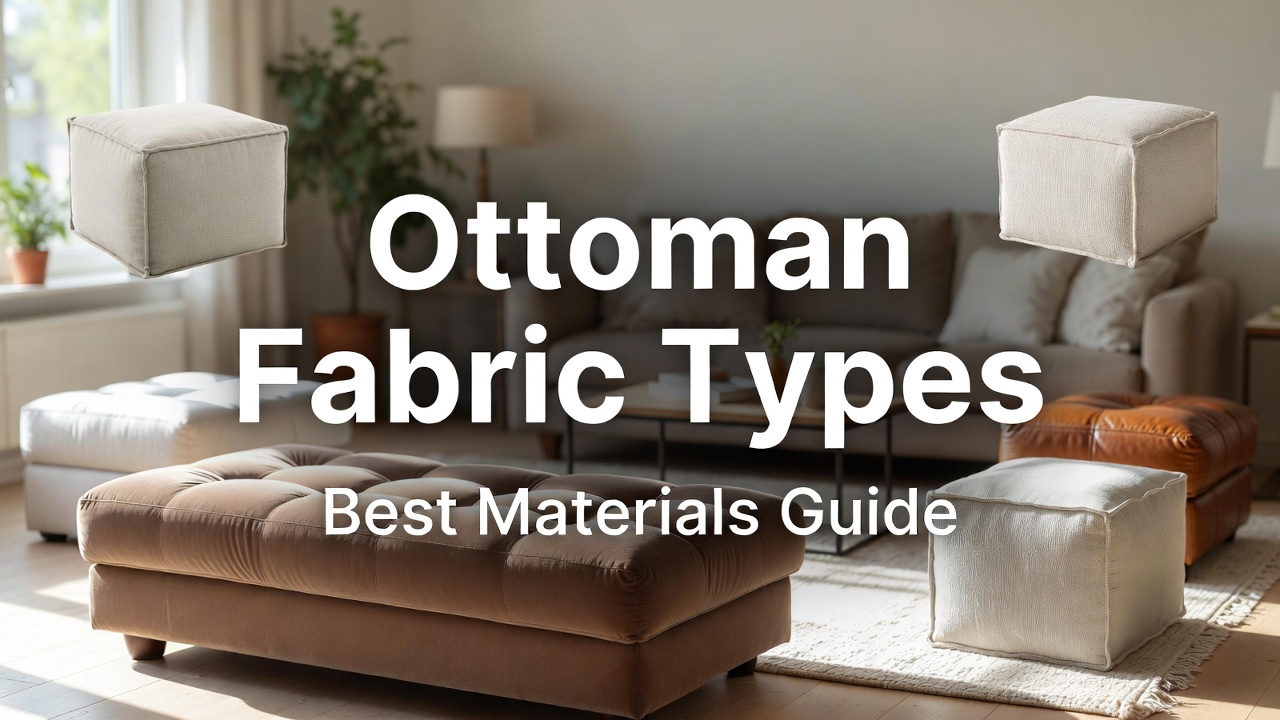
Ottoman Fabric Types: Every Option Compared with Real Pros and Cons
Velvet, leather, boucle, microfiber, linen — which ottoman fabric type is actually right for your home, your lifestyle, and how you use it daily.
I’ve owned ottomans in velvet, genuine leather, microfiber, linen blend, and boucle — and each taught me something different about how fabric affects your daily life. The velvet one looked magnificent for about three weeks before my dog discovered it. The leather one is still going strong after four years. What I’ve written here is what I wish someone had told me before buying.
Choosing an ottoman fabric type is one of the most important decisions in the whole purchase — more important than color, and arguably more important than size. The wrong ottoman fabric type will fade, pill, stain, or attract pet hair in ways that make you regret the purchase within months. The right one will still look great in five years.
This guide covers every major ottoman fabric type with honest pros and cons, durability ratings, cleaning difficulty scores, and — most importantly — which lifestyle each one actually suits. No fluff, no sponsored recommendations.
📋 In This Guide
Quick Comparison: All Ottoman Fabric Types
Before going deep on each ottoman fabric type, here’s the complete side-by-side comparison across the factors that matter most in real home use:
| Fabric Type | Durability | Cleanability | Pet/Kid Friendly | Style Versatility | Price Range |
|---|---|---|---|---|---|
| Genuine Leather | ★★★★★ | ★★★★☆ | Caution | ★★★☆☆ | $$$–$$$$ |
| Performance Microfiber | ★★★★★ | ★★★★★ | Best | ★★★☆☆ | $–$$ |
| Faux Leather (PU) | ★★★☆☆ | ★★★★★ | Good | ★★★☆☆ | $–$$ |
| Velvet | ★★★☆☆ | ★★☆☆☆ | Avoid | ★★★★★ | $$–$$$ |
| Boucle | ★★★☆☆ | ★★☆☆☆ | Avoid | ★★★★★ | $$–$$$ |
| Linen / Linen Blend | ★★★☆☆ | ★★☆☆☆ | Caution | ★★★★☆ | $$ |
| Cotton / Cotton Blend | ★★★☆☆ | ★★★☆☆ | Caution | ★★★★☆ | $–$$ |
Understanding Double Rub Ratings
When you’re comparing ottoman fabric types, manufacturers list a “double rub” rating — this is the standard industry durability test. One double rub equals one back-and-forth motion across the fabric. The higher the number, the more wear the fabric can withstand before showing significant degradation.
📊 Double Rub Guide for Ottoman Fabric Types
When buying an ottoman, look for fabric rated at minimum 15,000 double rubs for everyday living room use. Homes with kids or pets should look for 25,000+. Budget ottomans often don’t list this rating — which is itself a warning sign.
Each Ottoman Fabric Type: The Full Picture
Velvet is woven with a cut-pile construction that creates its signature soft, lustrous surface. It’s available in crush velvet, velour, and performance velvet varieties — and the differences between them matter enormously for how the ottoman holds up in daily use.
- Unmatched visual richness — looks expensive at any price point
- Available in the widest range of colors of any ottoman fabric type
- Soft and warm to the touch
- Performance velvet varieties are significantly more durable
- Recovers well from compression marks with steaming
- Attracts pet hair like a magnet — constant lint rolling required
- Liquid spills must be blotted immediately or they stain permanently
- Shows directional marks from sitting, rubbing, brushing
- Fades in direct sunlight faster than most other fabric types
- Not suitable for homes with dogs or cats without covers
Genuine leather is the only ottoman “fabric” that actually improves with age in the right conditions. Full-grain leather (the highest quality) develops a patina that makes it look better at ten years than it did at year one. Top-grain leather is slightly more uniform but still excellent. Bonded leather — leather scraps glued onto backing — is often sold as “leather” but is a completely different and far inferior product.
- Most durable ottoman fabric type available — lasts decades
- Pet hair doesn’t cling — wipes off with a cloth
- Develops beautiful patina — improves with age
- Spills bead up if cleaned quickly — naturally water-resistant
- Hypoallergenic — no fibers to trap dust mites or allergens
- Most expensive ottoman fabric type by a significant margin
- Requires regular conditioning — dries and cracks without care
- Cat claws will scratch the surface permanently
- Cold and slightly sticky in very cold rooms
- Limited color options — mostly browns, blacks, tans, and whites
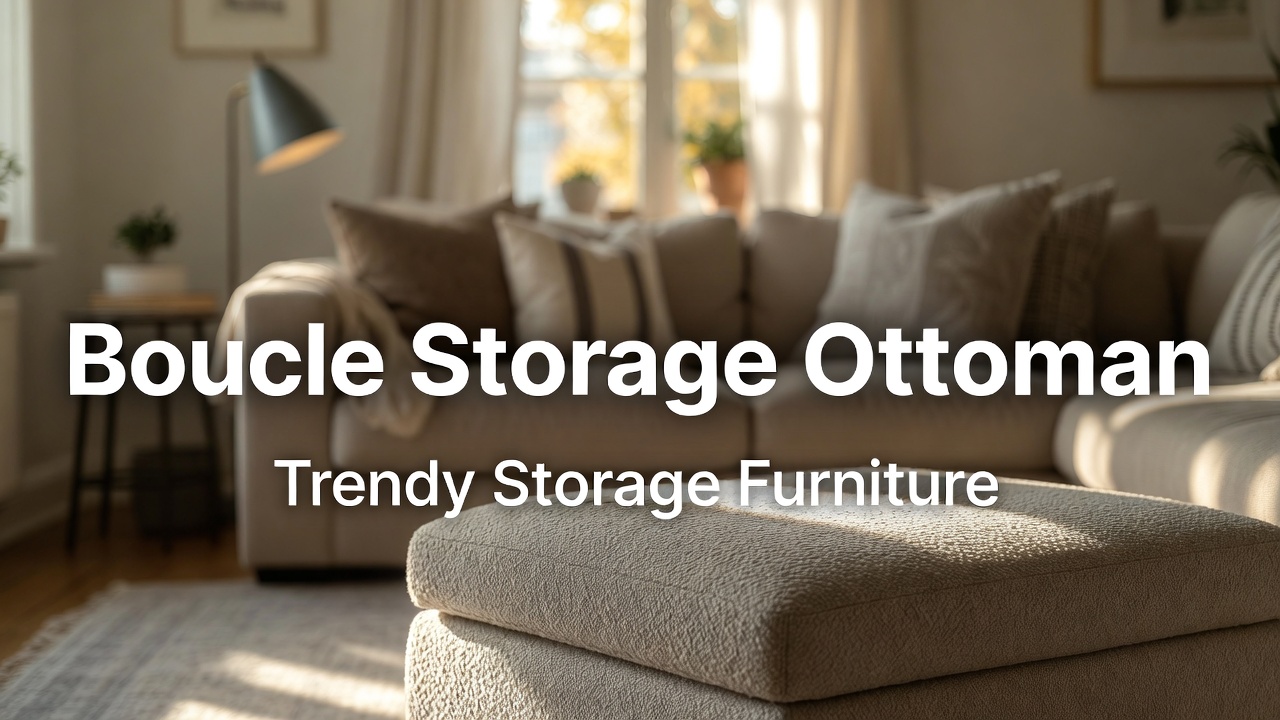
Boucle (from the French word for “buckle” or “curl”) is a looped, textured fabric with a distinctive nubby surface. It became the dominant ottoman fabric trend from 2021 onwards and is still at peak popularity. The texture is its selling point — but those same loops are what make it challenging in high-use environments.
- Visually striking textural interest — elevates any room
- Warm and inviting appearance — suits contemporary and Scandi styles
- Usually available in beautiful neutral palettes (cream, ivory, oat)
- Hides light surface dust better than smooth fabrics
- Pairs effortlessly with natural wood and warm metal accents
- Loops snag on pet claws, jewelry, and rough clothing
- Pet hair weaves deeply into the loops — nearly impossible to fully remove
- Liquid spills absorb into the texture quickly — staining is very easy
- Pilling occurs in high-friction areas (where you sit and rest feet)
- Cannot be spot-cleaned without leaving visible water marks
Performance microfiber is made from extremely fine synthetic fibers (typically polyester) woven so tightly that liquids bead on the surface rather than absorbing. It’s frequently overlooked because it’s associated with cheap furniture — but premium performance microfiber is genuinely one of the best ottoman fabric types for real-world use, at a fraction of the price of leather.
- Best stain resistance of any soft ottoman fabric type
- Extremely high double rub ratings — outlasts most other fabrics
- Very easy to clean — damp cloth handles most spills
- Significantly cheaper than leather for similar durability
- Soft to the touch — comfortable for bare feet and skin
- Can look “cheap” if the weave quality is poor — buy higher-grade only
- Static electricity attracts dust and some pet hair
- Less visually interesting than velvet, boucle, or linen
- Can feel slightly synthetic to the touch compared to natural fabrics
- Lower-quality versions pill and bobble with heavy use
Linen is a natural fiber made from flax plants. It has a distinctive woven texture and matte finish that looks effortlessly organic and works beautifully in natural, coastal, and Scandi interiors. Most “linen” ottomans are actually linen blends — usually linen mixed with cotton or polyester — which improves durability over pure linen alone. Knowing the blend ratio matters for buying decisions. According to fabric care guidelines at Good Housekeeping, linen-blend upholstery is best spot-cleaned only — never saturated with water.
- The most naturally beautiful and organic-looking ottoman fabric type
- Breathable — doesn’t hold heat in warm rooms
- Gets softer with washing and age
- Works in coastal, farmhouse, Scandi, and natural modern styles
- Generally more affordable than leather or high-end velvet
- Wrinkles and creases visibly — looks “lived in” quickly
- Stains easily and water marks are visible even after drying
- Pure linen is prone to fading in direct sunlight
- Can pill and wear at high-friction contact points
- Not suitable for households with young children or pets
Faux leather (also called PU leather or vegan leather) is a synthetic fabric coated with polyurethane to mimic the look and feel of genuine leather. It’s dramatically cheaper than real leather and easier to clean than most fabric options — but it has a critical weakness: it peels and cracks over time, typically within 3–6 years of regular use, especially at fold and crease points.
- Extremely easy to wipe clean — best cleanability of all ottoman types
- Pet hair doesn’t stick — wipes off immediately
- Much cheaper than genuine leather while looking similar initially
- Available in many colors including unusual options genuine leather doesn’t offer
- Consistent finish — no natural variation to manage
- Peels and cracks at fold points — this is inevitable, not avoidable
- Cannot be repaired when it peels — replacement is the only option
- Looks fake up close in a way genuine leather never does
- Hot and sticky in warm weather — uncomfortable against bare skin
- Not a long-term investment — budget accordingly
Which Ottoman Fabric Type Is Right for Your Lifestyle?
This is the decision guide that should drive your choice — not aesthetics alone. The most beautiful ottoman fabric type for your room is only the right choice if it suits how you actually live.
| Your Household | Best Ottoman Fabric Type | Avoid |
|---|---|---|
| Dogs (especially large breeds) | Genuine leather, performance microfiber | Boucle, velvet, linen |
| Cats (scratching concern) | Performance microfiber, thick cotton blend | Genuine leather, boucle, velvet |
| Young children (spills, sticky hands) | Performance microfiber, faux leather | Linen, velvet, boucle |
| No pets, adult household, low traffic | Velvet, boucle, linen — all work well | Nothing to avoid — full choice available |
| Allergy sufferers | Genuine leather, faux leather, performance microfiber | Linen, cotton, boucle (trap allergens in fibers) |
| Budget-conscious buyer | Performance microfiber (best value long-term) | Faux leather (peels — poor long-term value) |
| Long-term investment mindset | Genuine leather — 20+ year lifespan | Anything synthetic — will need replacing sooner |
| Renter / temporary home | Faux leather, performance microfiber — easy to clean before moving | Genuine leather — too expensive for temporary use |
When shopping in person for an ottoman fabric type, do these two tests: (1) Press your thumbnail firmly into the fabric and release — if it leaves a lasting mark, it will show daily wear quickly. (2) Blow on the fabric from close range — if fibers move and float, it will shed and attract lint. These 10-second tests reveal more than any product description.
Interior design experts at The Spruce recommend always requesting fabric swatches before purchasing upholstered furniture — including ottomans. A small swatch lets you test the fabric in your own lighting, against your existing furniture, and even do a water droplet test to check absorbency before committing.
FAQ: Ottoman Fabric Types
📚 Related Guides
✅ Bottom Line: Which Ottoman Fabric Type Should You Choose?
If you have pets or kids: performance microfiber at 30,000+ double rubs. Full stop. It outlasts everything else at a fraction of the price of leather.
If you want a long-term investment and have the budget: genuine leather. The 20-year lifespan makes the higher upfront cost the cheapest option per year of use.
If aesthetics are the priority and traffic is low: velvet or boucle — but go in knowing the maintenance requirements and realistic lifespan.
Ready to shop? Our guide to the best ottomans for living rooms organizes top picks by fabric type so you can find the right ottoman for your specific needs.