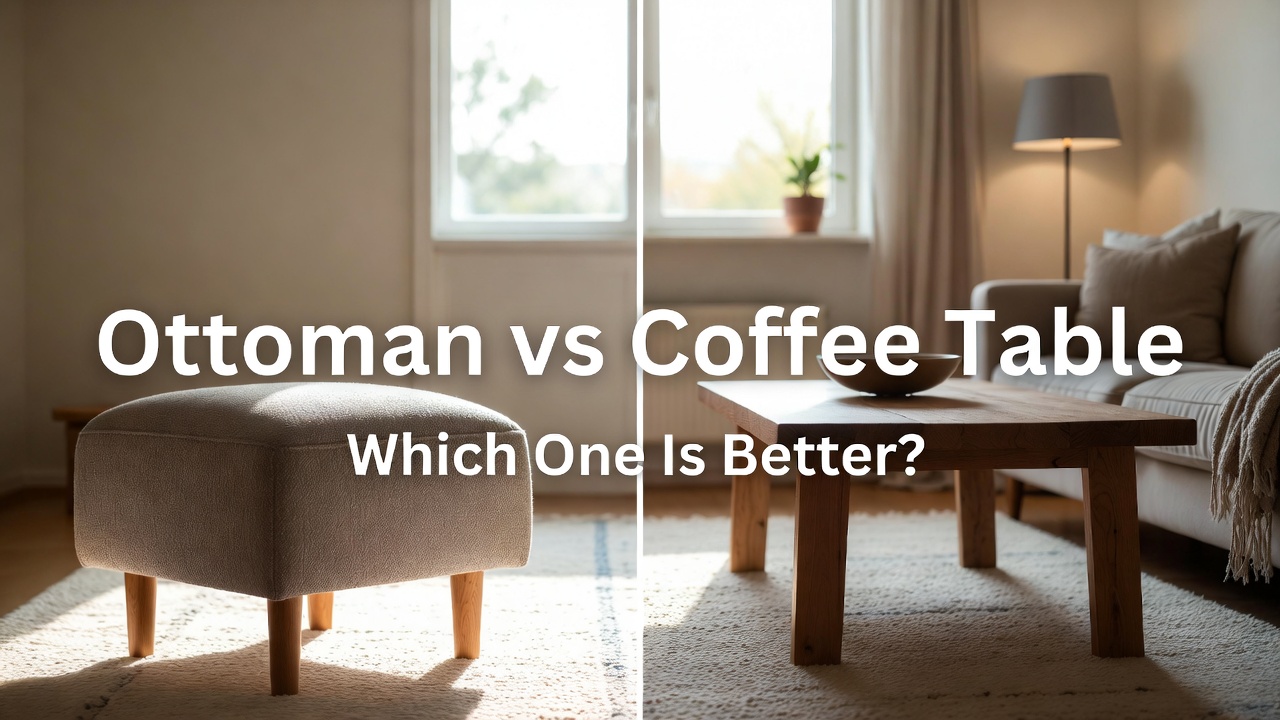
Ottoman vs Coffee Table: Which Is Actually Better for Your Living Room?
An honest breakdown — no fluff, no sponsored opinions. Just what actually works for different spaces and lifestyles.
I’ve lived in three different apartments over the past eight years — a tiny studio, a medium one-bedroom, and now a two-bedroom with an actual living room. I’ve owned both ottomans and coffee tables at different times. What I’ve learned: there is no universally “better” option. But there IS a clearly better option for YOUR specific situation. This guide will help you figure out which one that is.
The ottoman vs coffee table debate comes up constantly when people are furnishing a living room. You’re standing in a furniture store — or scrolling online at midnight — trying to decide between a coffee table and an ottoman. Both fit your budget. Both look nice. But you only have room for one. Which do you choose?
Most ottoman vs coffee table guides give you the same wishy-washy answer: “it depends!” But that’s not actually helpful. So let me give you something more concrete — a real comparison with clear winner-takes-all verdicts for specific situations.
📋 In This Guide
Ottoman vs Coffee Table: The Core Difference (In Plain English)
Before we compare anything, let’s be clear about what each piece actually is at its core:
- ✅ Soft, upholstered top
- ✅ Can be sat on as extra seating
- ✅ Footrest for relaxing
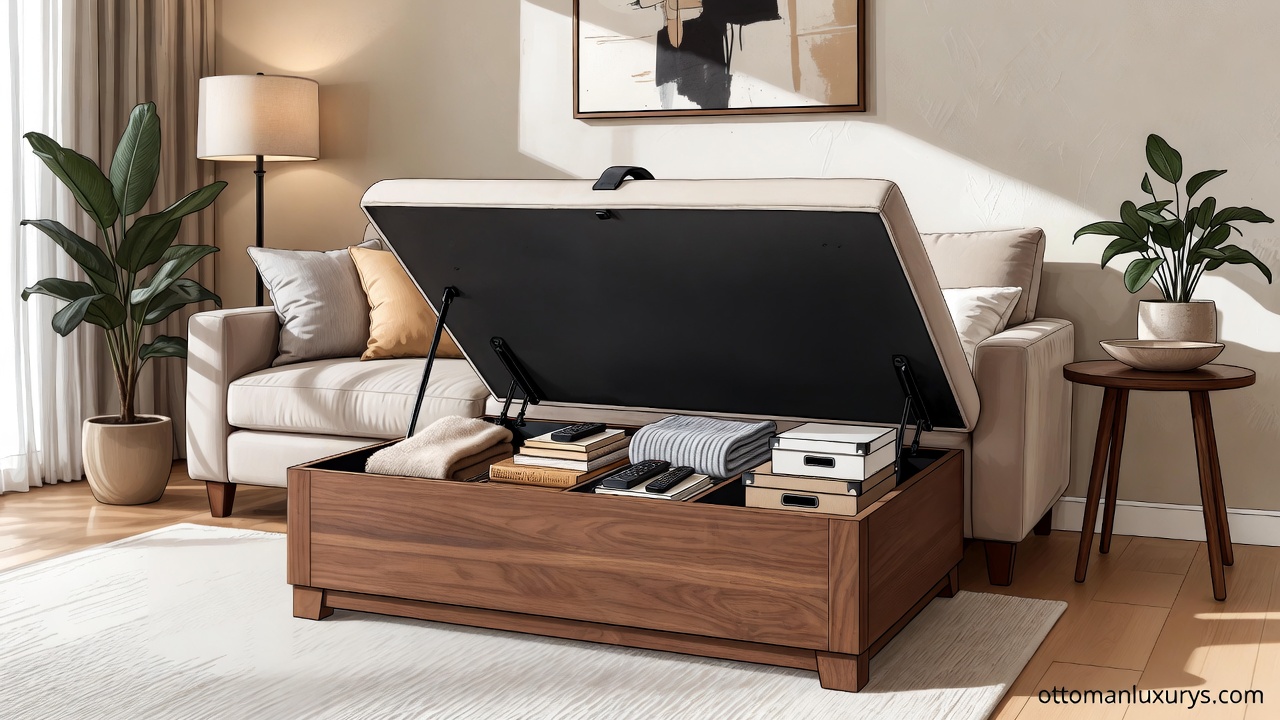
- ✅ Often has hidden storage inside
- ✅ No sharp corners — kid safe
- ⚠️ Needs a tray to hold drinks stably
- ⚠️ Fabric can stain and wear
- ✅ Hard, flat stable surface
- ✅ Perfect for drinks, remotes, books
- ✅ Easy to wipe clean
- ✅ Often has display or shelf space
- ✅ Looks more formal and structured
- ⚠️ Cannot be used as extra seating
- ⚠️ Sharp edges — risky with small kids
Ottoman vs Coffee Table: Head-to-Head Full Comparison
| Category | Ottoman | Coffee Table | Winner |
|---|---|---|---|
| Surface Stability | Soft top — drinks can tip without a tray | Hard, perfectly flat — ideal for drinks | ☕ Coffee Table |
| Small Room Suitability | Can be pushed aside, doubles as seat | Fixed piece, takes dedicated floor space | 🪑 Ottoman |
| Child Safety | Soft, no sharp corners, safe to bump into | Hard edges — common cause of bumps and cuts | 🪑 Ottoman |
| Storage | Storage ottomans hold blankets, toys, books | Some have shelves underneath, but no lid | 🪑 Ottoman |
| Extra Seating | Yes — can seat 1-2 extra guests easily | Not designed for sitting | 🪑 Ottoman |
| Easy to Clean | Fabric stains — needs careful cleaning | Hard surface — wipe with a cloth in seconds | ☕ Coffee Table |
| Formal Look | Casual, cozy, relaxed vibe | Structured, traditional, formal aesthetic | ⚖️ Depends on Style |
| Durability | Fabric wears over time with heavy use | Wood or metal lasts decades with basic care | ☕ Coffee Table |
| Flexibility | Lightweight, easy to move and reposition | Often heavy and stays in one place | 🪑 Ottoman |
| Cost (entry-level) | $40 – $150 for a decent basic ottoman | $60 – $200 for an entry-level coffee table | ⚖️ Similar |
Score: Ottoman wins 5 categories, Coffee Table wins 3, 2 are tied. But that doesn’t mean the ottoman is always the right choice — the categories that matter most depend entirely on how you live.
Ottoman vs Coffee Table for Small Rooms: Ottoman Wins
If your living room is under 200 square feet — or your sofa is against a wall with tight walking clearance — the storage ottoman is almost always the smarter choice. Here’s why:
- An ottoman can be pushed out of the way when you need floor space. A heavy wood coffee table cannot.
- A storage ottoman gives you a hidden place to put clutter — blankets, remotes, magazines — without adding another piece of furniture.
- Ottomans with softer, rounder shapes visually “weigh” less than a solid wood coffee table. Your room will feel more open.
- If guests come over, the ottoman becomes extra seating immediately, without you having to rearrange the room.
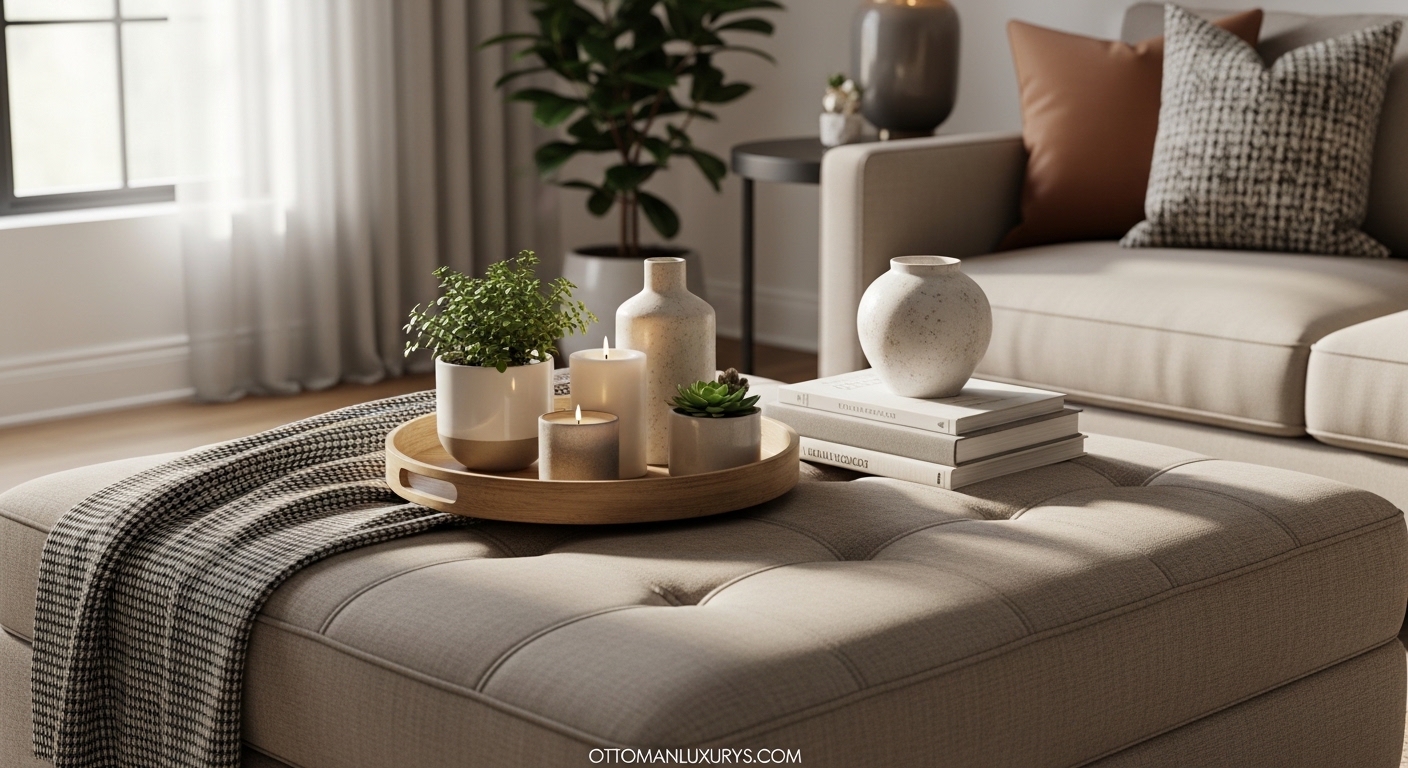
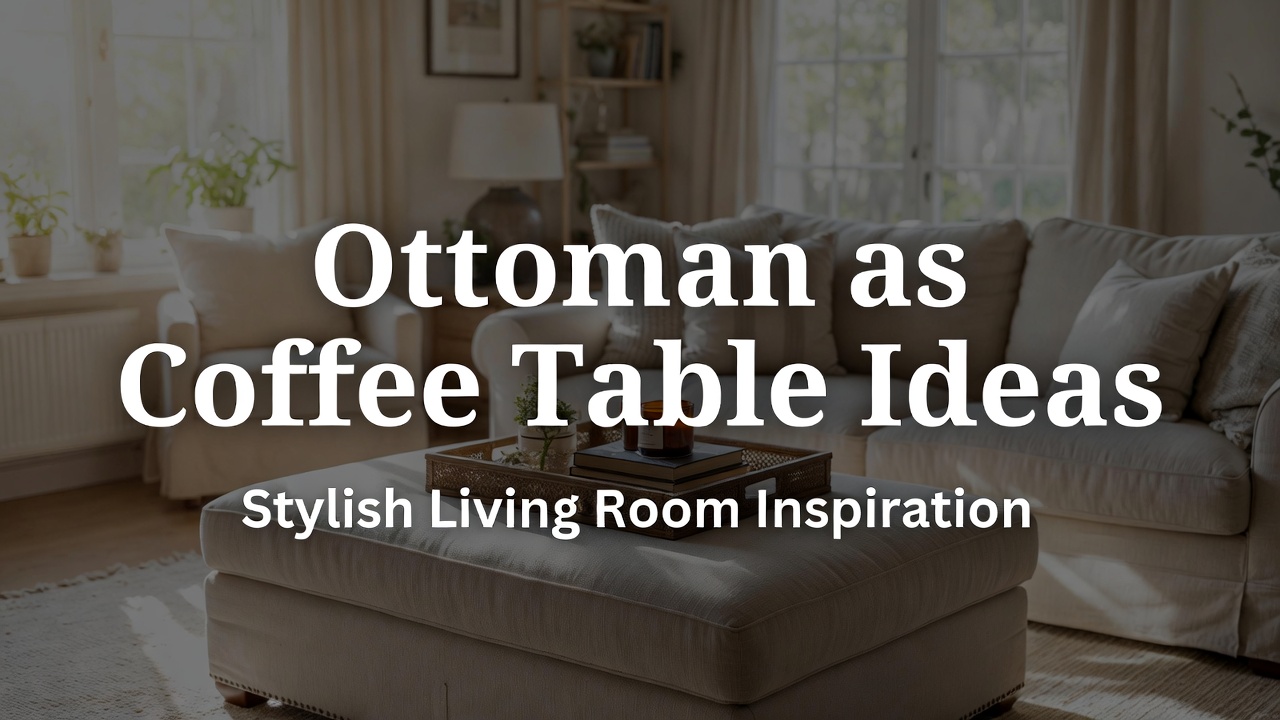
Buy a large round tray (12 to 16 inches) and keep it on your storage ottoman. This instantly creates a stable surface for drinks, your TV remote, and decor — giving you all the function of a coffee table on top of the ottoman’s flexibility. The tray can be moved when you need the ottoman as a seat.
📐 Sizing rule: Your ottoman or coffee table should be roughly half to two-thirds the length of your sofa. Leave 16 to 18 inches of clearance between the ottoman and the sofa for comfortable legroom.
Interior design resource Architectural Digest notes that ottomans used as coffee tables have surged in popularity in smaller urban apartments over the past five years.
For Families With Young Kids: Ottoman Wins
This one isn’t even close. If you have kids under 8 years old in your home, an ottoman is significantly safer than a coffee table. Coffee table corners — especially solid wood or glass — are at exactly the height of a toddler’s forehead. Emergency rooms see thousands of coffee table injuries every year.
An ottoman has no hard edges. A child running into it at full speed will bounce off harmlessly. And if they want to climb on it, it’s actually designed to hold weight — unlike the glass top of a coffee table.
Looking for the best ottomans specifically for households with children? We’ve reviewed the safest and most durable options in our guide to the best ottomans for kids.
For Storage Needs: Storage Ottoman Wins
If you’re short on storage — and most apartment and small-home dwellers are — a storage ottoman is one of the most practical furniture purchases you can make. A quality storage ottoman can hold:
- Two to three throws or blankets
- Board games and puzzle boxes
- Kids’ toys that you want out of sight
- Extra pillows or cushions
- Magazines, books, remote controls
A coffee table with a lower shelf can hold some things, but they’ll always be visible. The storage ottoman keeps everything hidden behind a clean, upholstered exterior.
For Style & Formal Aesthetics: It Depends
This is where personal preference genuinely matters more than any rule. Here’s a general guide:
🪑 Choose an Ottoman If Your Room Is…
- ✓ Casual, cozy, relaxed
- ✓ Bohemian or eclectic style
- ✓ A family room or TV room
- ✓ Sectional sofa layout
- ✓ Modern or Scandinavian
- ✓ You prioritize comfort
☕ Choose a Coffee Table If Your Room Is…
- ✓ Formal or traditional in style
- ✓ A proper living room (not just TV room)
- ✓ Mid-century modern or industrial
- ✓ You entertain guests frequently
- ✓ You want to display decor items
- ✓ You need a stable work surface
Your Quick Decision: Answer These 5 Questions
🎯 Find Your Answer in 60 Seconds
For each question, see which furniture piece fits your situation better.
If you answered “Yes” to 3 or more of the first four questions, get a storage ottoman. If you answered “Yes” only to the last question, a coffee table may suit you better.
According to furniture sizing guides from Wayfair’s design team, leaving proper clearance around your central table — whether ottoman or coffee table — is the most commonly overlooked factor in living room planning.
Can You Have Both an Ottoman AND a Coffee Table?
Absolutely — and in larger living rooms (over 250 square feet), this can actually be the best setup. A few ways people make it work:
- Side ottoman, center coffee table: Keep the coffee table as the main centerpiece, and add a round pouf ottoman in a corner near the armchair for a footrest.
- Ottoman as a side table: Place a smaller cube ottoman beside the sofa as a side table alternative.
- Ottoman in the bedroom: Move the ottoman to the foot of the bed for a completely different function.
If you have both, make sure they’re in coordinating colors or materials — not matching exactly, but clearly from the same “family.” For example, a navy velvet ottoman works beautifully alongside a dark walnut wood coffee table.
Frequently Asked Questions
📚 More Guides You Might Find Helpful
✅ The Bottom Line
For most people in small-to-medium living spaces — especially those with kids, limited storage, or a need for flexible seating — a storage ottoman is the better choice over a traditional coffee table.
Coffee tables win if you need a hard, stable surface for regular entertaining, prefer a formal aesthetic, or have a large living room where the extra footprint isn’t a problem.
If you’re leaning toward an ottoman, start with our guide to the best ottomans for living rooms — we’ve compared dozens to find the best storage, style, and value for every budget.